Written by Stephen Neary, Founder of Eloping in Ireland
Last updated: October 2026
Dreaming of exchanging vows on the edge of an Atlantic cliff, inside an ancient castle ruin or surrounded by the wild green landscapes of Ireland? The good news is that planning an Ireland elopement from the USA or Canada is much easier than you might think.
Couples from overseas can legally get married in Ireland, and there are incredible ceremony locations for everything from a private two-person elopement to an intimate destination wedding with family and friends.
This complete guide explains how to elope in Ireland, including legal requirements, costs, the best places to elope, packages, weather, travel, planning timelines and the important differences between getting married in the Republic of Ireland and Northern Ireland.
Whether you’re just starting to dream or you’re ready to choose a date, here’s everything you need to know.
In this complete guide
- Eloping in Ireland: the quick answers
- Can Americans and Canadians legally get married in Ireland?
- Legal requirements and marriage paperwork
- Legal vs symbolic ceremonies
- Getting married in Northern Ireland
- How much does it cost to elope in Ireland?
- The best places to elope in Ireland
- Choosing the right Ireland elopement location
- The best time of year to elope in Ireland
- Weather and backup plans
- Bringing guests
- Choosing your wedding vendors
- Why an Ireland-based planner matters
- How far in advance to plan
- Planning your elopement from overseas
- Traveling from the USA or Canada
- Irish wedding traditions
- Frequently asked questions
- About the author
Eloping in Ireland: the quick answers
If you’re at the beginning of your research, start with these answers to the most frequently asked questions about Eloping in Ireland.
Can Americans and Canadians legally get married in Ireland?
Yes. Overseas couples can legally marry in Ireland provided they meet the applicable legal requirements and complete the required marriage notification process.
Do we have to live in Ireland before getting married?
No. You don’t need to be an Irish resident to marry in Ireland. If you’re planning a legal marriage from overseas, contact the relevant Civil Registration Service early so they can explain the notification process and appointments that apply to your circumstances.
Can we have a symbolic ceremony instead?
Absolutely. Some couples complete their legal marriage at home and have a symbolic ceremony in Ireland, giving them additional flexibility over the ceremony location and format.
How much does it cost to elope in Ireland?
Costs vary depending on location, services and guest numbers. Eloping in Ireland’s couple-only Lite Packages currently start from €2,400, while more inclusive packages vary by location and services.
Where can we elope in Ireland?
From dramatic Atlantic cliffs and castles to ancient ruins, lakes, mountains, historic churches, country houses and traditional Irish pubs.
Can we bring guests?
Yes. An Irish elopement doesn’t have to mean just the two of you. Many couples bring their closest family and friends, while others choose a completely private ceremony.
Do we need an Ireland-based wedding planner?
No, but having an experienced planner actually based in Ireland can make planning from thousands of miles away considerably easier. Local planners can visit locations, work with local vendors and understand what works in Ireland in real life — not just online.
Can Americans and Canadians legally get married in Ireland?
Yes. American and Canadian couples can legally marry in the Republic of Ireland, provided they satisfy the applicable legal requirements.
For a legally binding marriage, you’ll need to complete Ireland’s marriage notification process and obtain a Marriage Registration Form, or MRF. This is sometimes informally referred to as an Irish marriage license.
Ireland requires at least three months’ notice of your intention to marry. Because appointment availability and individual circumstances can vary, don’t treat three months as your planning target — begin the process well in advance.
For a detailed step-by-step explanation, read our complete guide to getting legally married in Ireland.
Legal requirements and marriage paperwork
What is the three-month marriage notification requirement?
This is one of the most important parts of planning a legally binding wedding in Ireland.
The Republic of Ireland requires couples to give at least three months’ notice of their intention to marry.
Couples planning from overseas should contact the relevant Registrar as early as possible and follow the instructions provided for their individual circumstances.
This is particularly important if either person has previously been married, has a foreign divorce or has immigration circumstances requiring additional documentation.
The key point is simple: don’t leave the legal process until three months before your wedding. Start early.
What documents do we need to get married in Ireland?
Requirements can vary depending on your circumstances, but couples should generally expect to provide documentation and information including:
- Valid photographic identification
- Birth certificates
- Proof of address
- Details of the intended marriage
- The intended ceremony date and location
- Details of the proposed solemnizer
- Names and dates of birth of two witnesses
- Relevant divorce, dissolution or death documentation where applicable
- Immigration documentation where applicable
Foreign divorces can require additional examination before they’re recognized under Irish law, so couples who have previously been married should contact the Registrar particularly early.
Your Registrar will confirm exactly what is required for your individual circumstances.
What is an Irish Marriage Registration Form?
The Marriage Registration Form, usually called the MRF, is the document required to legally register your marriage in the Republic of Ireland.
You’ll bring the MRF to your wedding ceremony. The person legally marrying you signs it as part of the marriage process, and it is then used to register the marriage.
Ireland recognizes civil, religious and secular legal marriage ceremonies, but a legally valid ceremony must meet the relevant requirements and be performed by an authorized registered solemnizer.
How much does the legal marriage process cost?
The statutory marriage notification fee in the Republic of Ireland is currently €200.
A marriage certificate can be ordered separately after your marriage has been registered.
Government fees and procedures can change, so always confirm current requirements with the Irish Civil Registration Service.
Legal vs symbolic ceremonies
Both can create an incredible wedding day. The right choice depends on what matters most to you.
Legally binding ceremony in Ireland
With a legal ceremony, your official marriage takes place in Ireland.
This is a great option if it’s important that the moment you exchange your vows in Ireland is also the moment you legally become married.
You’ll need to follow Ireland’s requirements regarding marriage notification, documentation, the ceremony, witnesses and a registered solemnizer.
Symbolic ceremony in Ireland
With a symbolic ceremony, couples normally complete their legal marriage requirements at home and then hold their personal wedding ceremony in Ireland.
Your Irish ceremony can still include vows, rings, readings, music, Celtic handfasting and all of the emotion and meaning of a wedding ceremony.
Because the Irish ceremony itself isn’t creating the legal marriage, a symbolic ceremony can sometimes offer greater flexibility over the setting and format.
Neither option is inherently better. Choose the one that suits the experience you want.
Getting married in Northern Ireland
This is an important distinction that couples planning an Ireland elopement can easily miss.
The Republic of Ireland and Northern Ireland are separate legal jurisdictions, so they have different marriage processes.
Northern Ireland requires marriage notice to be submitted within the 12 months before the marriage. The statutory minimum notice period is 28 days, although overseas couples should allow considerably more time than the legal minimum.
Immigration requirements can also apply when traveling to Northern Ireland specifically to marry.
If you’re considering Dunluce Castle, Kinbane Castle, Dunseverick Castle or another Northern Ireland location, read our complete guide to getting legally married in Northern Ireland.
How much does it cost to elope in Ireland?
There isn’t one standard price for an Ireland elopement.
A simple couple-only adventure will naturally cost less than a wedding including photography, videography, hair and makeup, flowers, chauffeur transportation, musicians, dinner, accommodation and a group of guests.
At Eloping in Ireland, our couple-only Lite Packages currently start from €2,400.
Our larger packages offer different combinations of planning and wedding-day services, and packages can be customized around what actually matters to you.
Rather than looking only at the headline price, compare what’s included, how much photography coverage you’re receiving, location fees, planning support and which services will still need to be arranged separately.
Read our complete guide to how much it costs to elope in Ireland for a detailed breakdown.
Or explore all of our Ireland elopement packages and compare locations, inclusions and prices.
The best places to elope in Ireland
Ireland packs an extraordinary variety of scenery into a relatively small island.
You can exchange vows overlooking the Atlantic in the morning and be celebrating beside a turf fire or pulling your own pint of Guinness later that day.
The right location depends on the experience you want, guest numbers, accessibility, privacy, travel time, weather backup options and whether you’re planning a legal or symbolic ceremony.
Cliffs of Moher and Hags Head
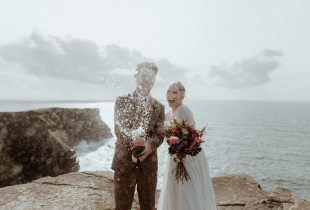
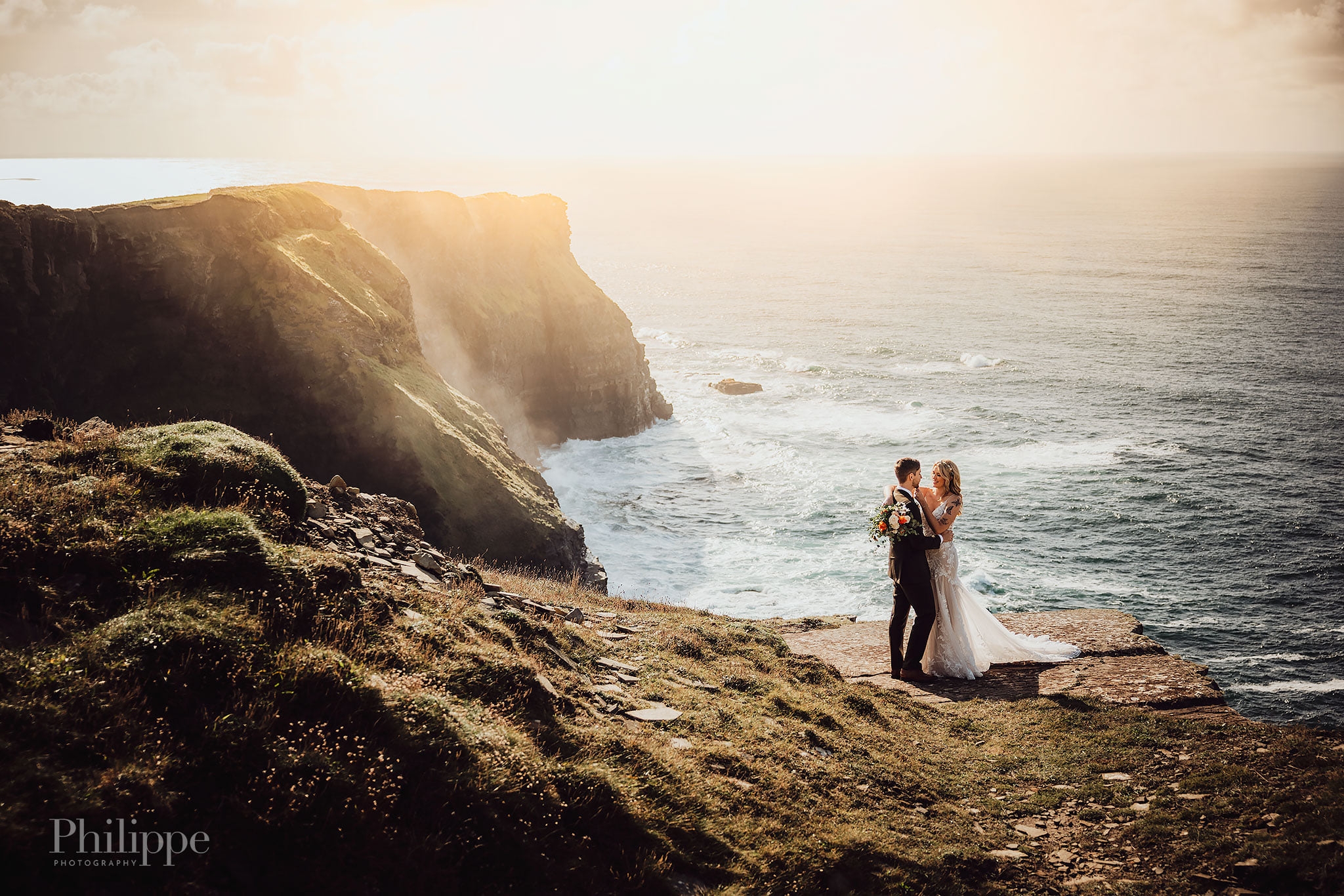
For couples imagining a wild Atlantic ceremony, the Cliffs of Moher are difficult to beat.
Our Cliffs ceremonies take place at Hags Head, at the quieter southern end of the cliffs. Eloping in Ireland couples have private drive-up access to the clifftop, avoiding the long walk normally required to reach this section.
Our Cliffs packages also include an indoor backup location because Irish weather should be part of your plan rather than something you simply hope behaves itself.
Explore our Cliffs of Moher elopement packages.
Dunluce Castle
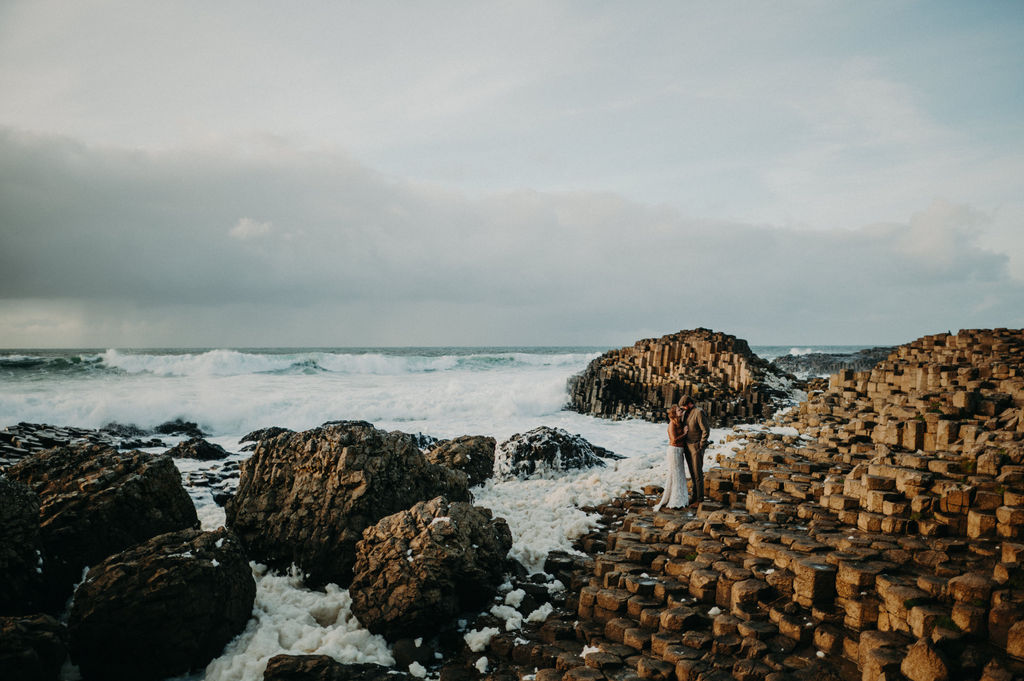
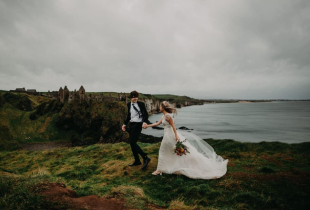
Sitting dramatically above Northern Ireland’s Causeway Coast, Dunluce Castle offers one of the most recognizable castle backdrops on the island.
It’s particularly suited to couples who want to combine their ceremony with an adventure photography experience around the Causeway Coast.
Dunseverick Castle, the Giant’s Causeway, the Dark Hedges and other spectacular locations can all become part of the wider experience.
Explore our Dunluce Castle elopement packages.
Irish castles
Ireland and castles go rather well together.
Depending on the experience you want, you can choose everything from atmospheric medieval ruins and tower houses to elegant castle estates.
Castle settings can be particularly appealing for couples who want history, romance and a distinctly Irish setting without necessarily choosing an exposed coastal ceremony.
Discover our Irish castle elopement packages.
Ancient ruins
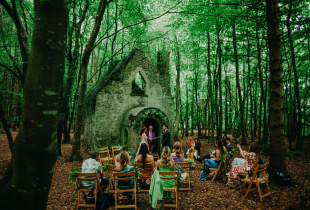
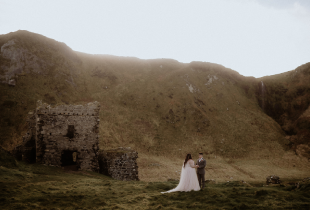
Roofless chapels, centuries-old church ruins, stone circles and hidden castle remains offer some of Ireland’s most atmospheric ceremony settings.
They’re ideal for couples who want somewhere intimate, historic and unmistakably Irish.
Explore our ancient ruins elopement locations.
Irish pub elopements
Not every unforgettable Irish wedding needs to happen on a cliff.
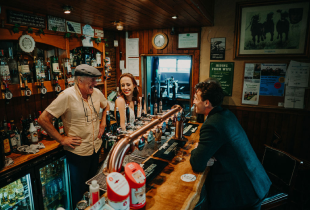
For couples who want warmth, laughter, Guinness and a relaxed celebration with their favorite people, a traditional Irish pub can be every bit as memorable.
Exchange your vows, enjoy dinner together, raise a glass and even try pulling your own pint of Guinness.
Explore our Irish pub elopement package.
Couple-only adventure locations
If it’s just the two of you, our Lite collection includes locations ranging from Slea Head and Killarney National Park to Slieve League, stone circles, castle ruins, mountain churches and even a cave beneath the Burren.
Explore our couple-only Lite elopement packages.
For even more inspiration, read our guide to the best places to elope in Ireland.
Choosing the right Ireland elopement location
Don’t choose your ceremony location from one beautiful photograph alone.
Consider:
Privacy. Is it normally crowded, or is there a more secluded alternative?
Accessibility. Does reaching it involve a long walk, steep steps or uneven ground?
Weather. What happens if there’s heavy rain or strong wind?
Guests. Somewhere perfect for two people may be unsuitable for 20.
Travel time. Trying to squeeze too many locations into one day can leave you spending your wedding in a car.
Legal requirements. A spectacular location for a symbolic ceremony isn’t automatically suitable for a legally binding marriage.
This is where firsthand local knowledge becomes particularly valuable.
Cliffs, castles or ruins: which is right for us?
For maximum drama and Atlantic scenery, start with the Cliffs of Moher.
If history and romance are your priority, explore Irish castles or Dunluce Castle.
Want somewhere intimate, unusual and filled with character, look at ancient ruins.
If your priority is adventure and it’s just the two of you, explore the Lite locations.
And if your ideal Irish wedding ends with Guinness, great food and plenty of laughter, don’t overlook an Irish pub elopement.
There isn’t a universally “best” location. There’s a location that’s best for your day.
The best time of year to elope in Ireland
There is no single perfect month to get married in Ireland.
Spring: March to May
Spring brings longer days, increasingly green landscapes and generally fewer visitors than peak summer.
April and May can offer an attractive balance between daylight, scenery and visitor numbers.
Summer: June to August
Summer offers Ireland’s longest days, giving you far more daylight for photography and exploring.
It’s also peak tourism season, so popular locations and accommodation can be busier.
Fall: September to November
September is a popular time for weddings, combining useful daylight with the beginning of quieter visitor numbers after peak summer.
As fall progresses, days become shorter and Ireland takes on a moodier, more atmospheric appearance.
Winter: December to February
Winter offers excellent privacy and wonderfully dramatic scenery for the right couple, but daylight is limited and weather flexibility becomes particularly important.
Whatever month you choose, don’t pick an Irish wedding date because somebody promises you sunshine.
Ireland doesn’t work like that.
Weather and backup plans
Ireland’s weather can change quickly at any time of year.
The answer isn’t finding a month when it definitely won’t rain. It’s planning a wedding that still works when it does.
For an outdoor elopement, consider:
- A sheltered or indoor backup where practical
- Flexibility in the timeline
- Suitable transportation
- Appropriate footwear
- Layers
- Enough photography time to take advantage of breaks in the weather
Our Cliffs of Moher/Hags Head and Dunluce Castle packages include indoor backup options, giving couples additional peace of mind at two exposed coastal locations.
And don’t assume cloudy or misty weather means disappointing photographs. Some of the most atmospheric Irish wedding images happen when the weather isn’t perfectly sunny.
Bringing guests
An elopement doesn’t have to mean no guests.
Some couples come to Ireland completely alone. Others bring parents, siblings and a handful of close friends. Some choose an intimate destination wedding with a larger group.
The important thing is to consider guest numbers before committing to a location.
A remote ruin that’s perfect for two people may not be suitable for elderly relatives or a group of 30.
If your dream really is just the two of you, our Lite elopement packages are designed specifically for couple-only ceremonies.
Choosing your wedding vendors
Common services for an Ireland elopement include:
- Elopement planner
- Photographer
- Videographer
- Celebrant or legal solemnizer
- Hair stylist
- Makeup artist
- Florist
- Chauffeur
- Ceremony musician
- Restaurant or reception venue
- Accommodation
- Guest transportation
You don’t necessarily need all of them.
One of the advantages of eloping is being able to spend your budget on the parts of the experience that actually matter to you instead of automatically recreating a traditional wedding on a smaller scale.
Can we choose our own wedding vendors?
With Eloping in Ireland, yes.
Our packages are customizable, and couples have the freedom to choose the photographers, videographers, celebrants and other professionals who best match their style.
We believe couples should know who they’re working with and be able to communicate directly with their vendors.
Your planner can introduce trusted local professionals and coordinate the overall experience, while you retain visibility and choice over the people involved in your wedding.
Why an Ireland-based planner matters
When you’re planning from the USA or Canada, you’re making decisions about places you may never have visited and vendors you may never have met.
An Ireland-based planner gives you something that’s difficult to replicate from thousands of miles away: someone physically here on the ground.
We can visit locations, meet vendors, understand realistic travel times, assess backup options and know how locations actually work in different conditions.
Eloping in Ireland has been helping international couples plan weddings and elopements since 2014. Having planned more than 1,500 celebrations, our team has built trusted relationships with venues and vendors across Ireland and Northern Ireland, backed by 300+ five-star WeddingWire reviews and multiple Couples’ Choice Awards.
You may be planning from overseas. We’re planning from right here in Ireland.
For more on why local knowledge matters, read why choosing an Ireland-based wedding planner makes a difference.
How far in advance to plan
For the widest choice of dates, locations and vendors, beginning around 9–12 months ahead is comfortable for many couples.
That doesn’t mean every Ireland elopement requires a year of planning. Simpler, couple-only or off-season celebrations can sometimes be arranged much faster.
Your ideal timeline depends on:
- Whether your ceremony will be legal or symbolic
- Your preferred date
- Location availability
- Guest numbers
- Vendor availability
- Accommodation
- How customized you want the experience to be
If you’re planning a legally binding marriage, start the legal process early rather than working backwards from the minimum notice period.
Planning your elopement from overseas
It can be surprisingly straightforward.
1. Decide what kind of experience you want
Start with the feeling rather than a checklist.
Clifftop adventure? Castle romance? Ancient ruin? Cozy pub? Just the two of you? A small group of your favorite people?
2. Choose your location and date
Your planner can help compare locations based on scenery, season, accessibility, guests and logistics.
3. Choose your package and vendors
Select the services you actually want and customize the experience around your priorities.
4. Start the legal process if required
If you’re getting legally married in Ireland, contact the appropriate Civil Registration Service early and follow the instructions they provide.
5. Plan the details
Photography, flowers, hair and makeup, transportation, music, ceremony details, timelines and any celebration afterwards can now come together.
6. Travel to Ireland
Give yourself time to settle in, recover from the journey and complete any required legal appointments.
7. Get married somewhere incredible
This is the easy part.
See exactly how planning an elopement with Eloping in Ireland works.
Traveling from the USA or Canada
Remember first that the Republic of Ireland and Northern Ireland are different jurisdictions.
The Republic of Ireland is an independent country and uses the euro (€).
Northern Ireland is part of the United Kingdom and uses pound sterling (£).
U.S. and Canadian visitors traveling to Northern Ireland generally need a UK Electronic Travel Authorization (ETA) unless an exemption applies. Always check current UK government requirements before traveling.
That requirement can apply even if you originally arrive on the island through Dublin and later travel into Northern Ireland.
Other practical things North American visitors should remember include:
- Ireland drives on the left
- Rural roads can make apparently short distances take longer than expected
- Automatic rental cars can be worth requesting in advance
- Weather can change quickly
- Ireland uses different electrical plugs from North America
- The Republic and Northern Ireland use different currencies
Which airport should we fly into?
It depends on where you’re getting married.
Dublin Airport is Ireland’s largest international gateway and works particularly well for Dublin, Wicklow and the eastern side of the country.
Shannon Airport is extremely convenient for the Cliffs of Moher, Doolin, Galway and much of the west coast.
Cork Airport is useful for Cork and southern Ireland.
For Dunluce Castle and the Causeway Coast, Belfast’s airports can be convenient, although many North American couples also arrive through Dublin and travel north.
Whenever possible, choose your wedding location first and your flights second.
How long should we stay in Ireland?
If you’re crossing the Atlantic, we’d avoid making the wedding a two-day visit.
Giving yourselves several days before and after the ceremony lets you recover from travel, complete any required appointments, enjoy the area surrounding your wedding location and turn your elopement into a much bigger Ireland experience.
Many couples combine their wedding with a honeymoon or road trip around the country.
Irish wedding traditions
One of the most popular traditions for overseas couples is Celtic handfasting, where ribbons or cords are wrapped around the couple’s hands during the ceremony.
Other ways to bring Ireland into your wedding include:
- Traditional Irish music
- Irish readings or poetry
- Claddagh rings
- Irish flowers
- A toast with Guinness or Irish whiskey
- Irish food
- Choosing a location steeped in Irish history
The best traditions are the ones that genuinely mean something to you rather than things added simply because they’re Irish.
Can same-sex couples legally marry in Ireland?
Yes.
Same-sex couples can legally marry in both the Republic of Ireland and Northern Ireland, subject to the applicable marriage requirements.
Eloping in Ireland works with LGBTQ+ couples from around the world, and our locations and vendor network welcome LGBTQ+ couples.
For inspiration from a real celebration, see our same-sex elopement at the Cliffs of Moher and discover what an intimate LGBTQ+ elopement in Ireland can look like.
Do we need a traditional wedding reception?
Not at all.
Some couples head off for an adventure photography session and then have dinner together.
Others book a private restaurant room, celebrate in an Irish pub or arrange dinner and drinks with their guests.
Your wedding can be as traditional or unconventional as you want.
That’s one of the best things about an elopement: there isn’t a rulebook you need to follow.
Frequently asked questions
Can Americans get married in Ireland?
Yes. U.S. citizens can legally marry in Ireland provided they meet Ireland’s marriage requirements and complete the applicable marriage notification process.
Can Canadians get married in Ireland?
Yes. Canadian citizens can legally marry in Ireland subject to the applicable Irish marriage requirements.
Do we need an Irish marriage license?
For a legally binding marriage in the Republic of Ireland, you’ll need a Marriage Registration Form issued through the civil registration process. It is sometimes informally referred to as a marriage license.
Do we need to live in Ireland before getting married?
No. Overseas couples can marry in Ireland. If you want a legally binding ceremony, contact the relevant Civil Registration Service early for the process that applies to you.
How much does it cost to elope in Ireland?
Costs vary by location, services and guest numbers. Eloping in Ireland’s couple-only Lite Packages currently start from €2,400, with more extensive packages available at different price points.
Can we elope in Ireland with no guests?
Yes. Many couples travel to Ireland completely alone. For a legal ceremony requiring witnesses, two suitable witnesses will still be needed.
Can we bring family and friends?
Absolutely. Many of our locations accommodate intimate guest groups, although maximum numbers vary considerably by location.
Can we get married at the Cliffs of Moher?
Yes. Eloping in Ireland offers ceremonies at Hags Head on the Cliffs of Moher, with private drive-up clifftop access and an indoor weather backup included in our packages.
Explore our Cliffs of Moher elopement packages.
Can we get married at Dunluce Castle?
Yes. Dunluce Castle on Northern Ireland’s Causeway Coast is one of our most popular locations. Remember that Northern Ireland has a different legal marriage process from the Republic of Ireland.
Explore our Dunluce Castle elopement packages.
What happens if it rains?
Outdoor weddings should always have a weather strategy. Some packages include dedicated indoor backup locations, while other locations may have optional backup arrangements available.
Can we customize our package?
Yes. Eloping in Ireland packages are customizable, allowing couples to select or add services and choose vendors that suit their vision.
Can we include Celtic handfasting?
Yes. Celtic handfasting can be incorporated into many ceremonies and is one of the most popular Irish traditions requested by overseas couples.
Is Ireland LGBTQ+ friendly for destination weddings?
Same-sex marriage is legal in both the Republic of Ireland and Northern Ireland, and Eloping in Ireland works with LGBTQ+ couples from around the world.
Is Northern Ireland part of Ireland for marriage paperwork?
Northern Ireland is geographically on the island of Ireland but legally part of the United Kingdom. The Republic of Ireland and Northern Ireland therefore have separate marriage procedures.
Do Americans and Canadians need an ETA for Northern Ireland?
Most U.S. and Canadian visitors require a UK ETA to travel to Northern Ireland unless an exemption applies. Always check current UK government requirements before traveling.
Ready to start planning your Ireland elopement?
You don’t need to have every detail figured out.
Start with the part that excites you most — the cliffs, castle, ruins, pub or adventure — and build the day from there.
Explore our full collection of Ireland elopement packages, discover our couple-only Lite Packages or get in touch with our Ireland-based planning team and tell us what you’re dreaming about.
You may be planning from overseas. We’re planning from right here in Ireland.
About the author
Stephen Neary — Founder of Eloping in Ireland
Stephen Neary founded Eloping in Ireland in 2014 with the goal of making it easier for couples from overseas to plan an unforgettable wedding or elopement in Ireland.
Since then, Stephen and the Eloping in Ireland team have helped plan more than 1,500 weddings, elopements and vow renewals for couples from the USA, Canada and around the world.
Based in Ireland, the team works directly with venues, photographers, celebrants, florists, musicians, transportation providers and other local wedding professionals throughout Ireland and Northern Ireland. Eloping in Ireland has also earned 300+ five-star WeddingWire reviews and multiple Couples’ Choice Awards.
Stephen’s experience includes helping international couples choose ceremony locations, understand the practicalities of planning from overseas, coordinate local wedding vendors and navigate the Irish marriage process.
The advice in this guide draws on more than a decade of firsthand experience planning real weddings and elopements throughout Ireland and Northern Ireland, rather than simply researching Ireland as a destination online.
Written by Stephen Neary, Founder of Eloping in Ireland.
Last reviewed and updated: October 2026.
Legal, immigration and travel requirements can change. Couples should always confirm current requirements with the relevant Irish, Northern Irish or UK government authority before making final arrangements.