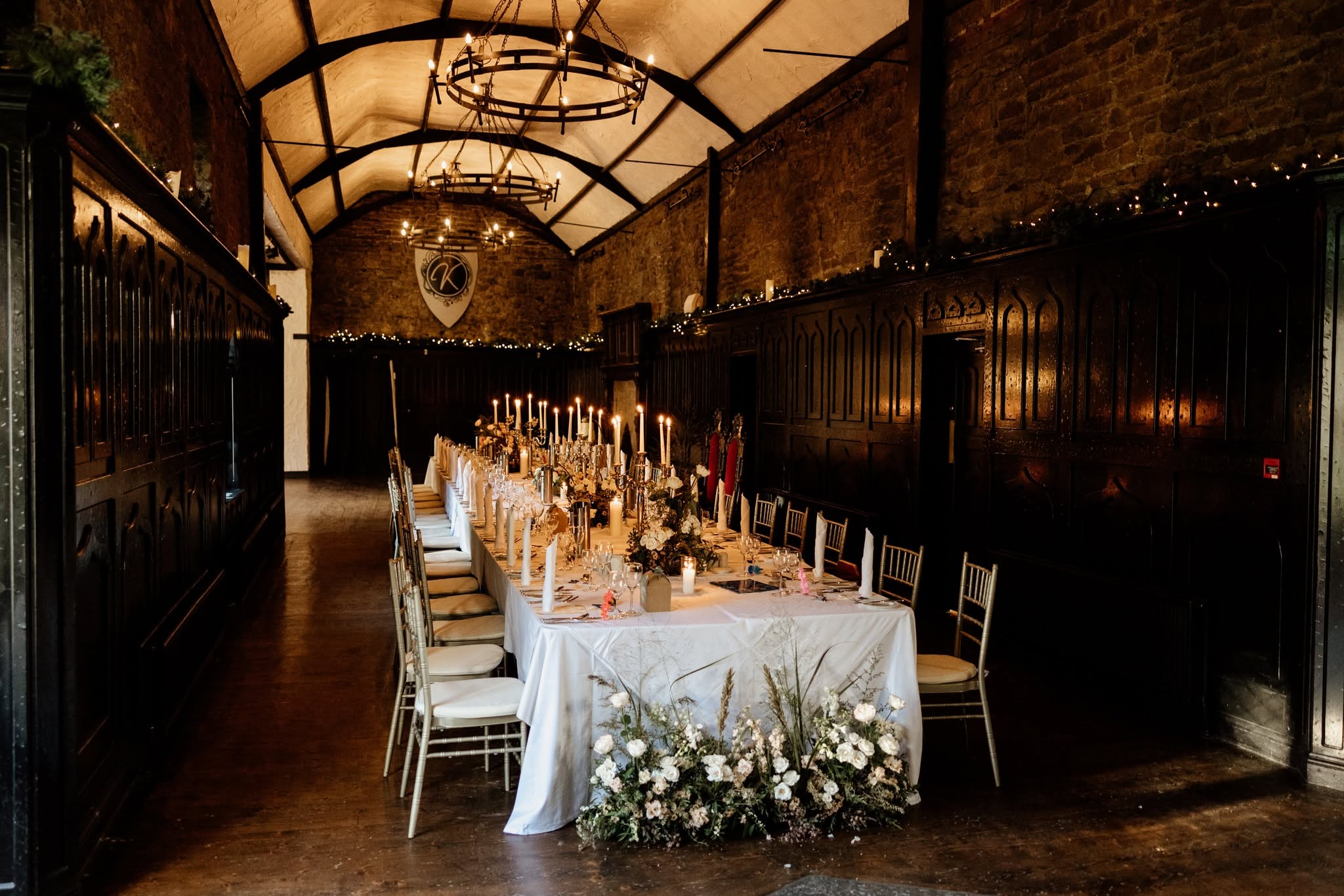
Not every Irish couple dreams of a big traditional wedding with 150 guests, a formal hotel reception and a full day of celebrations. For many couples, something smaller, more personal and more relaxed is far more appealing.
Small weddings in Ireland offer a wonderful alternative for couples who want to celebrate their relationship without the expense, pressure or expectations that can sometimes come with a large traditional wedding.
Whether you’re considering an intimate wedding with 10–30 guests, a romantic elopement for two, a beautiful castle wedding, a relaxed celebration with family and friends, or a meaningful vow renewal, Ireland offers some extraordinary possibilities.
And the best part? You don’t need to travel abroad to enjoy a unique wedding experience.
At Eloping in Ireland, we’ve been planning elopements and weddings throughout Ireland and Northern Ireland since 2014, helping couples create personal celebrations in some of the country’s most beautiful settings.
Having organised more than 1,500 weddings and elopements, we understand that every couple has their own idea of the perfect wedding day.
Although we specialise in elopements and intimate celebrations, we also organise larger weddings, including celebrations with 70–80 guests or more.
This guide is written specifically for Irish couples living in Ireland who are exploring an alternative to the traditional large wedding, including small weddings, intimate ceremonies, second marriages and vow renewals.
What is considered a small or intimate wedding in Ireland?
There is no official definition of a small wedding in Ireland, and different couples and venues may use different descriptions.
However, the following categories can be useful when exploring your options.
| Wedding type | Typical guest numbers |
|---|---|
| Just-us elopement | Couple only |
| Micro wedding | Up to 10 guests |
| Intimate wedding | Approximately 10–30 guests |
| Small wedding | Approximately 20–50 guests |
| Larger wedding celebration | 50–80+ guests |
These are general descriptions rather than fixed guest limits.
For some couples, a wedding with 30 guests feels wonderfully intimate. Others prefer a celebration with 50 or more family members and friends.
At Eloping in Ireland, we plan everything from private ceremonies for two to larger wedding celebrations. The number of guests simply influences which locations, venues and arrangements will work best.
A personal wedding isn’t defined by its size. It’s about creating an experience that reflects you as a couple.
Why are Irish couples choosing smaller weddings?
There are many reasons why couples living in Ireland might prefer a smaller, more relaxed wedding instead of a traditional large celebration.
1. Less pressure and fewer expectations
Planning a traditional Irish wedding can sometimes become more about accommodating other people’s expectations than celebrating your own relationship.
Guest lists, seating plans, extended family invitations and expensive reception arrangements can quickly become overwhelming.
A smaller wedding gives you the freedom to concentrate on the people and moments that matter most.
2. More choice of unique wedding locations
One of the biggest advantages of an intimate wedding is the range of ceremony locations available.
Instead of needing a venue capable of accommodating a large reception, you can explore historic castles, dramatic coastal settings, ancient ruins, woodland locations and charming country houses.
Some of Ireland’s most atmospheric wedding settings are particularly well suited to smaller groups.
For couples with larger guest lists, there are also beautiful castles, estates and country houses that can accommodate more substantial celebrations.
3. Greater control over your wedding budget
Smaller guest numbers can significantly reduce costs associated with catering, drinks, accommodation and other guest-related expenses.
That doesn’t necessarily mean your wedding needs to be inexpensive.
Some couples prefer to invest more in professional photography, beautiful flowers, a luxury setting, live music or a memorable dining experience.
The difference is that you have greater freedom to decide where your money goes.
4. A more personal and relaxed experience
With fewer guests, couples often have more time to enjoy their wedding day.
There may be less rushing between formalities, fewer group photographs and more opportunities to spend meaningful time with family and friends.
5. An alternative to the traditional Irish wedding
Not every couple wants a church ceremony, large hotel reception, speeches, a wedding band and dancing until the early hours.
Some would much prefer a romantic outdoor ceremony followed by dinner in a lovely restaurant or traditional Irish pub.
Others might choose a castle ceremony and a relaxed reception with 40, 60 or 80 guests.
There’s no single correct way to celebrate your wedding.
Can Irish couples elope in Ireland?
Yes. Irish couples can absolutely elope in Ireland, whether they want a legally recognised marriage or a symbolic celebration.
Eloping doesn’t necessarily mean running away in secret.
Modern elopements are often carefully planned, meaningful wedding experiences involving the couple alone or a handful of close family members and friends.
For Irish couples, an elopement might mean:
- Exchanging vows overlooking the Atlantic Ocean.
- Celebrating in the grounds of a romantic Irish castle.
- Choosing a peaceful woodland location.
- Having an intimate ceremony in a historic setting.
- Enjoying professional wedding photography followed by a romantic meal together.
Some couples tell their families beforehand, while others prefer to share their wedding photographs and news afterwards.
An elopement can be as simple or elaborate as you wish.
Explore our Ireland elopement packages for inspiration and examples of the experiences we can help arrange.
Best types of locations for small and intimate weddings in Ireland
One of the biggest advantages of planning a small wedding in Ireland is the freedom to choose a setting that genuinely reflects your personality and preferences.
Rather than being limited to traditional large wedding venues, couples can explore a wide range of beautiful locations throughout Ireland and Northern Ireland.
Whether you’re planning an elopement for two, an intimate wedding with 20 guests or a larger celebration with 70–80 guests or more, the right setting will depend on your preferred atmosphere, guest numbers, budget and ceremony requirements.
Romantic Irish castles
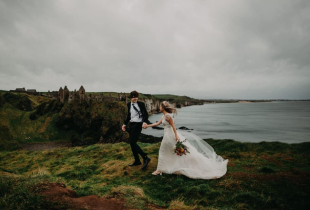
Ireland’s castles offer some of the most atmospheric settings for wedding ceremonies and celebrations.
From historic castle ruins to elegant castle hotels and private estates, there are options for couples seeking something romantic, traditional or completely different.
Some castle settings are particularly suited to intimate ceremonies, while others can accommodate larger wedding parties and receptions.
Guest capacity, accommodation, accessibility and ceremony arrangements vary between locations, so it’s important to choose a setting that suits your plans.
Coastal and cliffside weddings
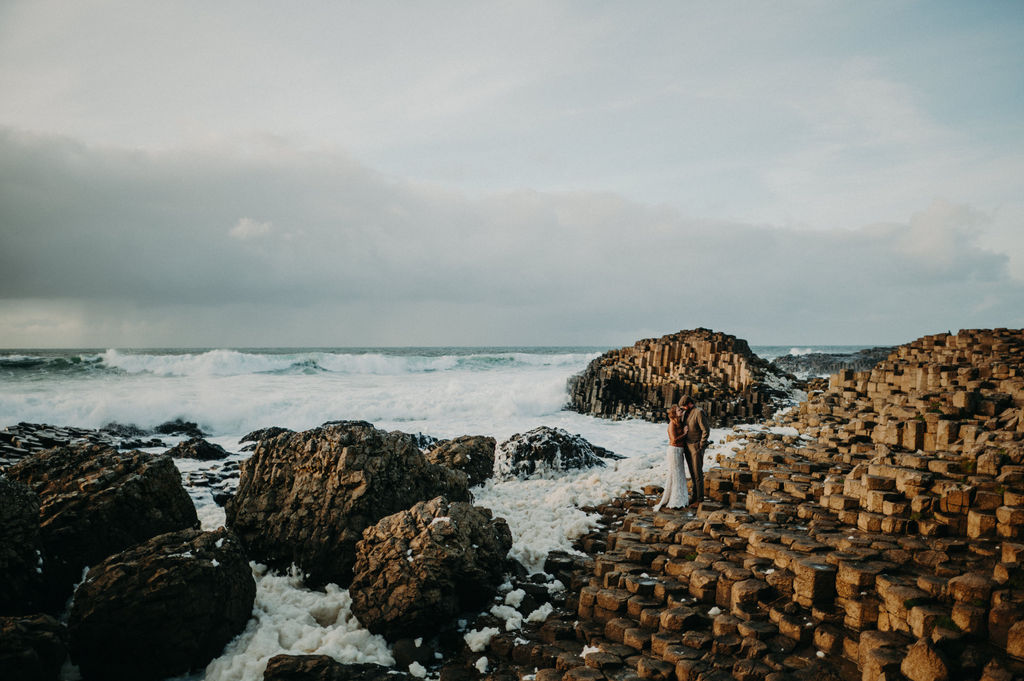
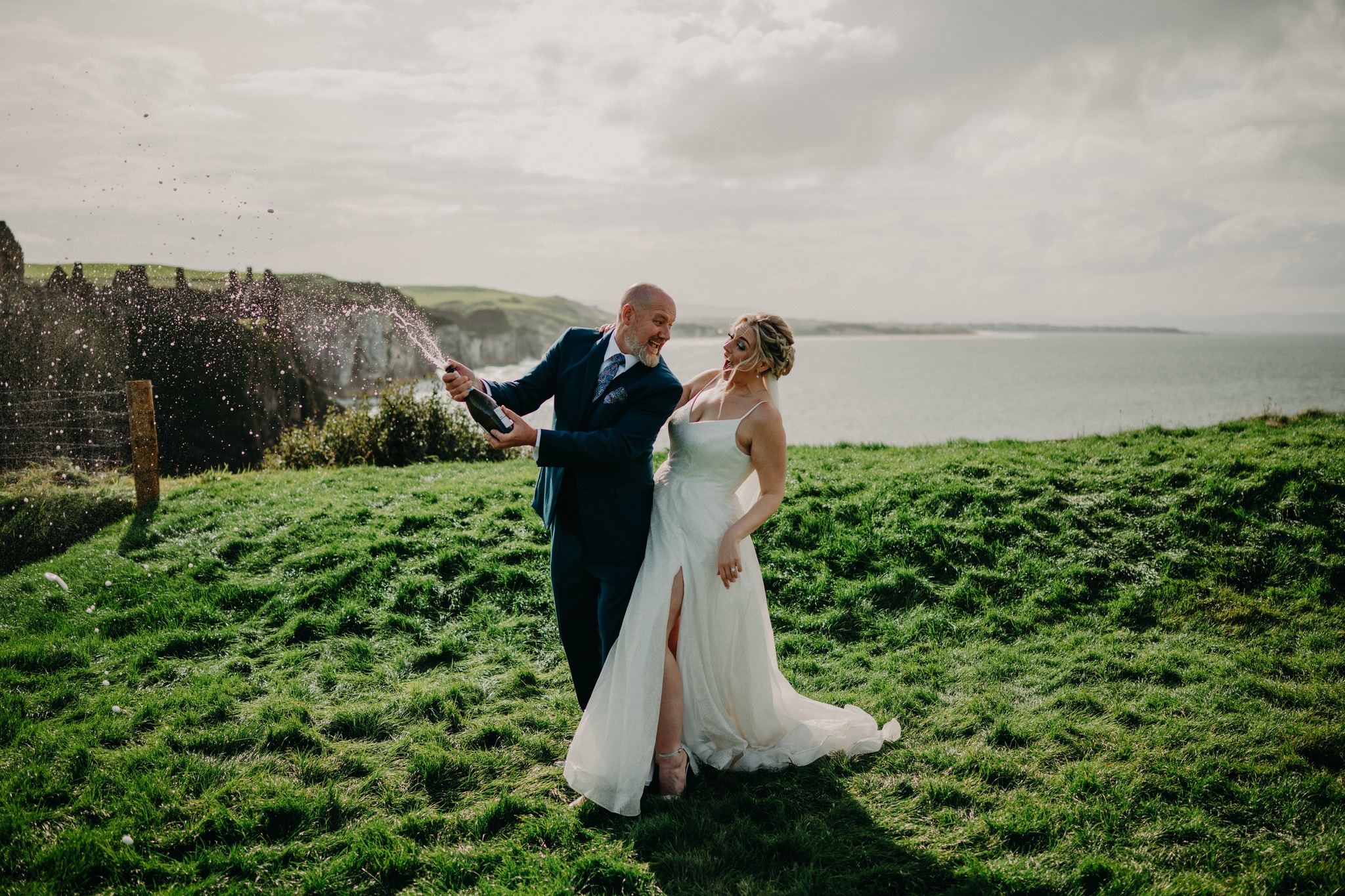
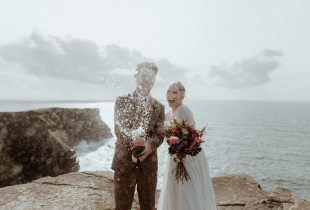
Ireland’s spectacular coastline provides a breathtaking backdrop for couples who love dramatic scenery and the outdoors.
Cliffside locations, secluded coastal settings and ocean views can create an unforgettable atmosphere for a personal wedding ceremony.
These locations are particularly appealing for elopements and smaller celebrations, although suitability depends on access, safety, permissions and guest numbers.
Because coastal weather can change quickly, having a suitable alternative ceremony arrangement is essential.
Ancient ruins and historic locations
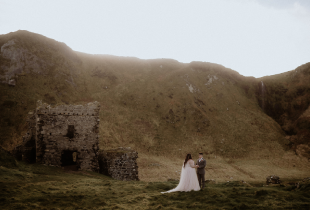
Ireland’s ancient abbeys, castle ruins and historic buildings offer a wonderful sense of history and romance.
These settings can be particularly appealing for couples looking for a ceremony with character, atmosphere and beautiful photographic opportunities.
However, not every historic location permits wedding ceremonies, and some are suitable only for symbolic celebrations.
Access restrictions, permissions, guest numbers and legal ceremony requirements should always be confirmed before making arrangements.
Country houses and private estates
For couples who prefer an elegant but relaxed atmosphere, country houses and private estates can offer a wonderful alternative to traditional large wedding hotels.
These settings may provide beautiful gardens, historic interiors, private dining spaces and accommodation.
Depending on the property, they can be suitable for smaller celebrations or weddings involving a larger group of family and friends.
Woodland and garden weddings
Woodland settings, private gardens and peaceful countryside locations can provide a beautiful natural backdrop for an intimate wedding or vow renewal.
These locations are especially appealing to couples who want a relaxed, personal ceremony surrounded by nature.
Outdoor ceremonies require careful planning around permissions, accessibility, weather conditions and the legal requirements for marriage.
Intimate restaurants and traditional Irish pubs
Not every couple wants a formal wedding reception.
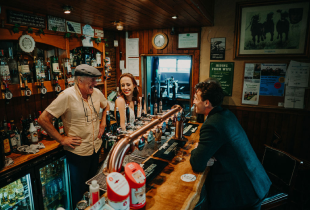
For some, the perfect celebration involves a beautiful ceremony followed by a relaxed meal in a restaurant or traditional Irish pub.
Private dining rooms and smaller reception spaces can be ideal for couples who want to spend quality time with their guests without organising a full traditional wedding reception.
This approach can also provide greater flexibility when planning your wedding budget.
Ultimately, the best wedding location in Ireland isn’t necessarily the most famous or expensive. It’s the one that suits your guest numbers, personal style and the experience you want to create together.
How much does a small wedding in Ireland cost?
One of the most common questions couples ask is whether a small wedding costs significantly less than a traditional Irish wedding.
Small weddings in Ireland can be considerably more affordable, particularly when fewer guests mean lower catering, drinks and reception costs.
However, the final price depends on your chosen location, suppliers, guest numbers and the type of celebration you want.
The following figures are illustrative planning budgets rather than fixed national averages.
| Wedding style | Illustrative budget |
|---|---|
| Simple civil ceremony with minimal extras | €500–€1,500 |
| Intimate elopement with professional suppliers | €2,500–€5,000 |
| Enhanced elopement with additional services | €5,000–€9,000+ |
| Small wedding with 20–30 guests and a reception | €6,000–€15,000+ |
| Luxury intimate wedding | €15,000+ |
These estimates are broad examples, not guaranteed prices. Venue hire, catering, accommodation and supplier choices can substantially affect the final cost.
At Eloping in Ireland, our Lite elopement packages start from approximately €2,400, with more comprehensive options available depending on your preferred location and services.
Packages can include professional wedding planning, photography, celebrants, flowers, transport and other suppliers, depending on the arrangements selected.
For larger weddings, pricing is tailored to the location, guest numbers and services required.
You can explore our Ireland elopement packages and pricing for more information.
Can you have an intimate wedding in Ireland with 10, 20, 30 or more guests?
Absolutely. Intimate weddings come in all shapes and sizes, and there is no strict guest limit.
Some couples dream of exchanging vows with just their closest family members present, while others want to celebrate with 30, 50 or even 80 guests.
At Eloping in Ireland, we can help plan everything from a private ceremony for two to a larger wedding celebration with extended family and friends.
10 guests might involve your parents, siblings and closest friends, followed by a private meal in a restaurant.
20–30 guests offers the opportunity for a meaningful ceremony and a relaxed celebration where everyone can spend time together.
40–50 guests can still feel wonderfully personal, particularly at a smaller castle, country house or private setting.
70–80 guests or more can also retain an intimate atmosphere when the location, layout and overall experience are thoughtfully planned.
The most important consideration is choosing a location that suits your guest numbers, budget and preferences.
Some of Ireland’s most beautiful coastal locations and historic ruins are best suited to smaller groups, while castles, country houses and other settings can accommodate much larger celebrations.
Can you get legally married outdoors in Ireland?
Yes, but there are important legal requirements.
In the Republic of Ireland, a legally recognised marriage must be conducted by an authorised solemniser at a location that meets the relevant requirements for that type of ceremony.
You cannot assume that any beach, cliff, forest or public landmark is automatically suitable for a legal wedding.
Civil, religious and secular ceremonies may have different rules concerning locations, permissions and availability.
For couples who have their hearts set on a particular outdoor setting, one option is to complete the legal marriage separately and hold a symbolic ceremony at their preferred location.
This can offer greater flexibility, particularly at historic sites or exposed coastal locations.
What legal paperwork do Irish couples need to get married?
For most couples marrying in the Republic of Ireland, the main steps include:
- Giving at least three months’ notification of your intention to marry to the Civil Registration Service.
- Attending the required marriage notification appointment.
- Providing the necessary identification and supporting documentation.
- Obtaining a Marriage Registration Form once the legal requirements have been satisfied.
- Having the marriage conducted by an authorised solemniser.
- Having two witnesses aged 18 or over.
The standard marriage notification fee is €200, although other fees may apply depending on the ceremony and individual circumstances.
Couples should always check the latest requirements with the HSE marriage registration service.
Northern Ireland operates under a separate marriage registration system, so couples considering a wedding there should check the relevant Northern Ireland requirements.
Small weddings for second marriages in Ireland
A small or intimate wedding can be particularly appealing for couples getting married for the second time.
Some couples prefer a quieter celebration with their children and closest family members, while others want a completely different experience from their first wedding.
An intimate wedding might involve:
- A romantic ceremony at an Irish castle.
- A coastal elopement followed by a special meal.
- A relaxed celebration involving children and close family.
- A private ceremony with professional photography.
- A countryside wedding with a small reception.
There’s no expectation that a second wedding should be less meaningful or less special than a first wedding.
It’s simply another opportunity to create a celebration that reflects your relationship.
If either person has previously been married, additional legal documentation may be required, so it’s important to check the marriage registration requirements early in the planning process.
Vow renewals in Ireland: celebrating your marriage again
Small weddings aren’t only for couples getting married for the first time.
Vow renewals in Ireland are a wonderful way for married couples to celebrate an important anniversary, mark a meaningful milestone or simply reaffirm their commitment to one another.
A vow renewal is a symbolic ceremony in which an already married couple exchanges vows again.
Unlike a legal marriage ceremony, a vow renewal does not create a new marriage or require a marriage licence.
Why do couples renew their vows?
There are many reasons why couples decide to renew their vows.
Some are celebrating their 10th, 20th, 25th or 40th wedding anniversary.
Others had a simple wedding originally and now want to enjoy a special celebration with their children or grandchildren.
Some couples simply want to mark the journey they’ve shared together.
There doesn’t need to be a particular anniversary or reason.
Where can you renew your vows in Ireland?
Ireland offers a wonderful selection of settings for vow renewals.
Depending on the location and permissions, possibilities include:
- Scenic coastal locations.
- Romantic Irish castles and historic estates.
- Ancient ruins and abbey settings.
- Peaceful woodland locations.
- Private gardens and countryside settings.
A vow renewal can involve just the two of you or include family members and friends.
How much does a vow renewal in Ireland cost?
The cost depends on the location, guest numbers and services involved.
A simple private ceremony may require only a celebrant, while a more elaborate experience might include photography, flowers, music, transport and a special meal.
Because vow renewals are symbolic, couples generally have greater flexibility with ceremony arrangements than they would for a legally recognised marriage.
However, location permissions, access restrictions and supplier costs still apply.
At Eloping in Ireland, we can help couples create personal vow renewal experiences using many of the same beautiful settings and professional suppliers available for our elopements.
Do you need a wedding planner for a small wedding in Ireland?
Not necessarily.
If you’re arranging a straightforward registry office ceremony followed by a meal with family, you may be perfectly happy organising everything yourselves.
However, a professional planner can be especially valuable when your wedding involves an unusual location, several suppliers, outdoor arrangements or a ceremony away from a traditional wedding setting.
An experienced Ireland-based planner can help with:
- Finding suitable locations for your preferred guest numbers.
- Understanding permissions and ceremony restrictions.
- Coordinating photographers, celebrants, florists and musicians.
- Arranging transport and supplier timings.
- Organising suitable alternatives if the weather changes.
- Bringing the different elements of your wedding together.
Even for couples who already live in Ireland, planning a wedding at the opposite end of the country can involve considerable organisation.
At Eloping in Ireland, our Ireland-based team coordinates the overall planning process while couples can also communicate directly with their chosen suppliers.
Couples pay their vendors directly, providing transparency and control over their wedding finances, while our team remains the main planning contact throughout.
This approach has worked successfully across more than 1,500 weddings and elopements since 2014.
You can learn more about choosing an Ireland elopement planner.
Small wedding or traditional wedding: which is right for you?
Choosing between a small wedding and a traditional celebration isn’t simply a financial decision.
It’s about how you want to experience your wedding day.
| Small or intimate wedding | Traditional larger wedding |
|---|---|
| Smaller guest list | Larger circle of family and friends |
| Greater flexibility with some locations | More traditional reception options |
| Often lower guest-related costs | Higher catering and reception costs |
| Relaxed, personal atmosphere | Larger social celebration |
| More time with individual guests | More guests to accommodate |
| Can focus on a ceremony and meal | Often includes a full-day reception |
Neither option is inherently better.
If the thought of a big wedding excites you, a traditional celebration may be ideal.
But if you find yourself wishing you could skip the large guest list and simply enjoy a beautiful, meaningful day together, an intimate wedding may be exactly what you’re looking for.
And remember, you don’t have to choose between an elopement for two and a wedding with 150 guests.
There are plenty of possibilities in between.
How to plan a small wedding in Ireland: step by step
If you’re considering an intimate wedding, the process can be much simpler when you approach it in the right order.
Step 1: Decide what kind of celebration you want
Start by asking yourselves what matters most.
Do you want a legally recognised marriage, a symbolic ceremony or a vow renewal?
Would you prefer an outdoor adventure, a romantic castle setting or a relaxed celebration with family?
Step 2: Agree on your guest numbers
Decide whether you want just the two of you, a handful of loved ones or a larger group.
You don’t need an exact final number immediately, but having an approximate guest count will help narrow down suitable locations.
Step 3: Set a comfortable budget
Think about the overall experience rather than simply the ceremony cost.
Your budget may need to cover photography, celebrant fees, flowers, transport, accommodation, catering, entertainment and location charges.
Step 4: Choose your wedding location
Consider scenery, accessibility, travelling distances, privacy and the time of year.
If you’re inviting elderly relatives or young children, practical considerations such as walking distances and facilities may be particularly important.
Step 5: Confirm the legal requirements
If you’re planning a legal marriage, check the notification requirements and availability of an appropriate solemniser before finalising your arrangements.
Step 6: Book your key suppliers
Photography, ceremony arrangements and any location access requirements are often among the first things to confirm.
Other services can then be arranged around your priorities.
Step 7: Have a realistic weather contingency plan
Outdoor weddings in Ireland can be spectacular, but weather conditions can change quickly.
Always have a suitable alternative, particularly for coastal and exposed locations.
Step 8: Make the day your own
Consider the personal details that will make your celebration meaningful.
That might be handwritten vows, traditional Irish music, a family heirloom, a special reading or dinner in a favourite restaurant.
A smaller wedding can give you the freedom to concentrate on the moments that really matter.
Frequently asked questions about small weddings in Ireland
Can two Irish people get married without inviting any guests?
Yes. A couple can have a very private legal wedding in Ireland without inviting a traditional guest list.
However, a legally recognised marriage still requires two witnesses aged 18 or over, along with the authorised solemniser.
For symbolic ceremonies and vow renewals, legal marriage witnesses are not required.
What is the cheapest way to get married in Ireland?
A straightforward civil marriage with minimal extras is generally one of the least expensive approaches.
A registry office ceremony followed by a simple meal may cost considerably less than hiring a private location and multiple wedding suppliers.
Can we get married in Ireland without having a wedding reception?
Yes. There is no requirement to organise a reception after your ceremony.
You can choose a restaurant meal, private dining room, traditional pub celebration or simply enjoy the day together.
Can we get married in a castle with only 10 guests?
Potentially, yes. Some castles and historic settings offer arrangements suitable for very small groups.
Others have minimum guest numbers, particularly for receptions.
Always check the individual location’s policies before booking.
Can we have a wedding with 70 or 80 guests?
Absolutely. Although Eloping in Ireland specialises in elopements and intimate weddings, we also plan larger celebrations, including weddings with 70–80 guests or more.
The key is choosing a location that comfortably accommodates your guest numbers and preferred arrangements.
Can we have a small outdoor wedding in Ireland?
Yes. Outdoor wedding ceremonies can be arranged in Ireland, provided the location is suitable and the necessary permissions and legal requirements are met.
For a legally recognised marriage, additional requirements apply. A symbolic ceremony may offer greater flexibility.
Do Irish couples need to give three months’ notice to get married?
Generally, yes. Couples planning a legal marriage in the Republic of Ireland must give at least three months’ notification, subject to limited exceptions authorised through the appropriate legal process.
Can we renew our vows without a celebrant?
Yes. A vow renewal is symbolic, so you can exchange personal vows privately without a celebrant.
However, many couples choose a professional celebrant to create a more structured and meaningful ceremony.
Is a small wedding the same as an elopement?
Not necessarily.
An elopement usually involves the couple alone or a very small number of guests, while a small wedding may include 20, 30, 50 or more people.
The terms often overlap, and there is no official guest-number distinction.
Can we plan a small wedding in Ireland in a few months?
Yes, depending on the type of ceremony and the availability of your preferred location and suppliers.
Symbolic ceremonies and vow renewals can often be arranged with greater flexibility.
For legal marriages, the statutory notification period and other requirements must be taken into account.
Are small weddings suitable for second marriages?
Absolutely.
Many couples planning a second marriage prefer a relaxed, intimate celebration rather than a large traditional wedding.
A small wedding can be tailored around your family circumstances, preferences and the people you want to include.
Can we include our children in an intimate wedding or vow renewal?
Of course.
Children can take part through readings, symbolic gestures, music, personal vows or simply by being present.
For many couples, including their children makes the celebration even more meaningful.
Planning a small wedding, intimate celebration or vow renewal in Ireland?
If you’re an Irish couple considering a more personal way to celebrate your relationship, you don’t have to follow the traditional wedding format.
Whether you’re dreaming of a romantic elopement for two, an intimate wedding with your closest family and friends, a beautiful castle ceremony, a meaningful vow renewal or a larger celebration with 70–80 guests or more, we’d love to help you explore your options.
At Eloping in Ireland, we’ve been helping couples create personal wedding experiences since 2014, with more than 1,500 weddings and elopements organised, over 300 five-star reviews on WeddingWire and multiple Couples’ Choice Awards.
Although many of our couples travel from overseas, we’re equally delighted to work with Irish couples living here in Ireland who want something different from the traditional large wedding.
Our approach is flexible, personal and focused on creating a wedding that reflects the two of you.
Get in touch with Eloping in Ireland to discuss your ideas or arrange a free planning call.
Your wedding doesn’t have to be big to be unforgettable.